

There can only be a few people in this country who profess to not liking chocolate, or so the sales of Cadbury Dairy Milk (CDM) would attest. CDM (owned by Mondelez) reported a £505 million value in sales in 2021/22 – that’s a lot of chocolate……or is it?
The ingredients in a bar of CDM are listed as: milk, sugar, cocoa butter, cocoa mass, vegetable fat (palm, shea), emulsifiers (E442 – ammonium phosphatide used instead of soy lecithin, E476 – polyglycerole polyricinoleate, used to improve flow so less cocoa butter needed) and flavourings (could be anything from any laboratory). The percentage of cocoa in each bar is around 20%. In the UK, milk chocolate must contain at least 25% of cocoa solids for it to be sold as chocolate, whilst white chocolate must contain a minimum of 20% cocoa butter. But for a rich chocolate flavour surely the higher the percentage of cacao, the more intense the flavour will be?
That brings us to the process of chocolate making and how the makers can decide how their chocolate tastes, from choosing the origin of cacao from which country, through to the fermentation process, roasting, conching and refining – it is a long process that needs to be nurtured from start to finish, to enable the finished product to shine. And once made, ageing adds yet another dimension – something I’ve only recently leaned that a lot of chocolate makers do.
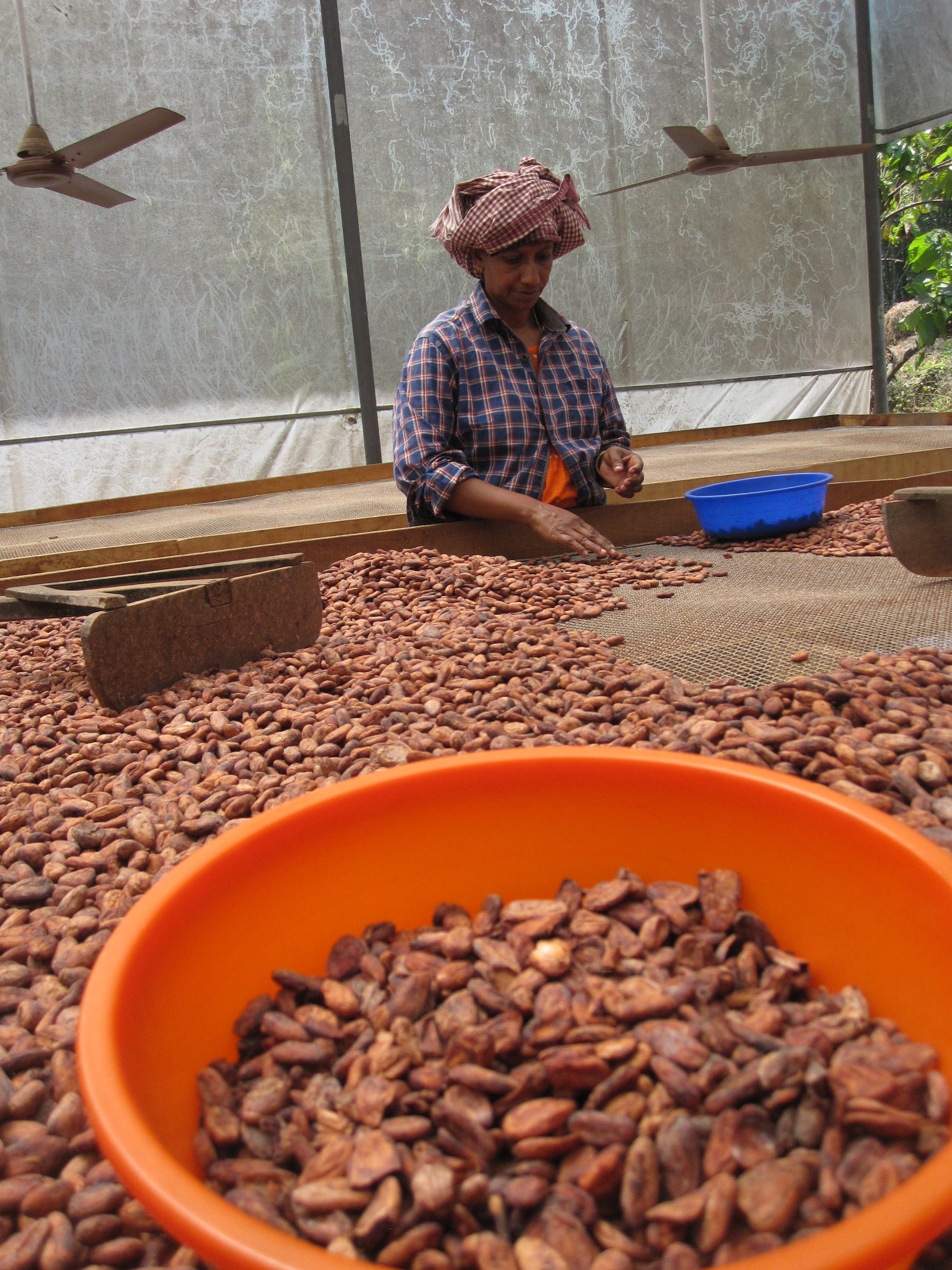
There has been an increase in craft chocolate-makers over the past thirty years – an increase that appears to be continuing due to the demand of foods that are sustainable, with provenance and great flavour. And as a Registered Nutritionist I want to eat the best quality food I can, and that includes pure, unadulterated chocolate. And it’s not just because it has great flavour- I want to eat great tasting food that I know my body will love, and be able to process, with nutrients it can use.
Cocoa beans (once cacao is roasted it is called cocoa), are a rich source of polyphenols, reported to have a high antioxidant effect, and there is lots of talk about the health benefits of chocolate, although a lot of the studies are very small, or sponsored by a chocolate maker, or just very hard to prove. My theory is always to buy food that is as natural as possible, if it is a packaged food that it has fewer ingredients (and all of them are recognisable!), and if possible those ingredients are sustainable and organic (the issue with organic cacao is that many small scale cacao farmers cannot afford to register their farms as organic, even though they may have been growing that way for decades). So craft chocolate fits the bill in so many ways, plus you can support small artisan producers in the UK, some of whom are international award winners – Solkiki (Silver: Cashew Milk 49, Silver: Somerset Pomona Nibs 60, Silver: Star Anisey Night 40, Bronze: Cherryleaf Latte 39), Duffy’s (Silver: Duffy’s Guatemala Rio Dulce 70%).
I recently spent an amazing 10 days travelling around Southern India, visiting cacao plantations and chocolate makers. Despite the British inflicting that country with CDM too, the cacao farmers are fighting back and slowly learning what a great commodity they have, and how craft chocolate makers value good quality cacao and are prepared to pay a better price. There are some interesting makers based in India too – Bon Fiction (their Mango Menace , 55% dark Alphonso mango Chilli is a firm favourite of mine!) have won many awards for a number of their bars. Kokoatrait pride themselves on using traditional spice infusions, and are also passionate about sustainability – the packaging is made partly from the husk of the cacao pod.
I find the idea of becoming a chocolate tourist very tempting – choosing the places I visit based on the chocolate makers there! Not surprisingly, Europe is awash with great makers (check out the 2022 International Chocolate Awards winners), but most people are surprised when I mention India. Next on the agenda is Japan – yes, another country that can boast a lot of fantastic chocolate makers that you’ve probably never heard of.
Obviously we can’t all travel so far to get our chocolate and although it’s not always possible to find the UK bars in local shops, they mostly all sell online, and there are others chocolate lovers that can source those obscure bars for you – Cocoa Runners, Chocolate Seekers and Chocoladeverkopers.
If you are around the Oxfordshire or West London area and would like a private Craft Chocolate Tasting please get in touch – it’s a great way to spend a couple of hours, learning, tasting and laughing. Keep in touch via instagram – @savouringcacao.